The High Ring
Six months after the election of the low ring members, there shall be an annual election to elect the 15 members of the high ring. Only the members of the low ring are eligible to vote for this election. Only members of the current low ring, current high ring, and advisors are eligible to be voted for. This group will elect the 15 members to the high ring, based on a plurality vote.
Because low ring members are working with each other closely in their various committees, they would better know which among them are suited for a high ring position rather than the membership at large. In other words, the low ring members can make a wiser voting decision than general membership. This makes the high ring an indirect election from the general membership.
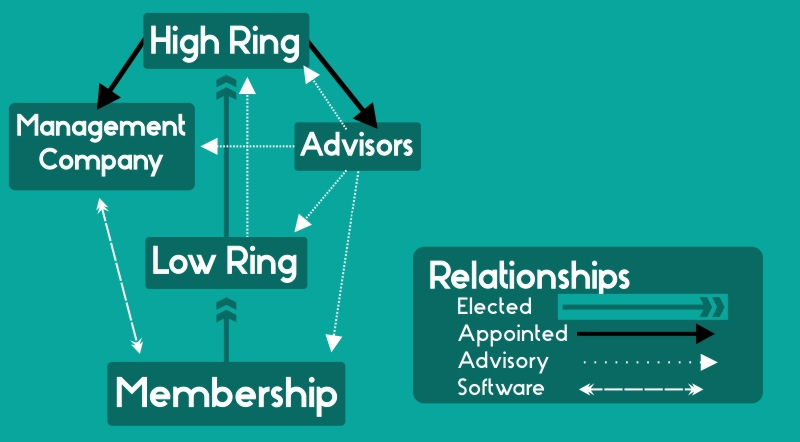
Similar to the low ring, the high ring should have an online mechanism to create motions, provide sufficient discussion, and put those motions to a vote.
Most deliberations of the high ring should be made public to the low ring and general membership. There may be times when the high ring discussion needs to go “in camera” (closed to the public). A good example of an in-camera discussion will be when freedom of personal information is a consideration. However, the high ring should use this in-camera privilege sparingly as transparency should be an important feature of Consensus.
The high ring is the actual decision maker of Consensus. It should listen carefully to the advice (passed motions) of the low ring committees and advisors. But the high ring is not obligated to act on this advice. The high ring has the bigger picture of the various parts of Consensus.
If the high ring does not take the advice of a low ring committee, it should explain itself either through a formal explanation or by including the low ring motion in the high ring consultation. Even if the low ring motion is not accepted, low members will still feel their work was seriously considered and had an impact on the high ring's final decision.